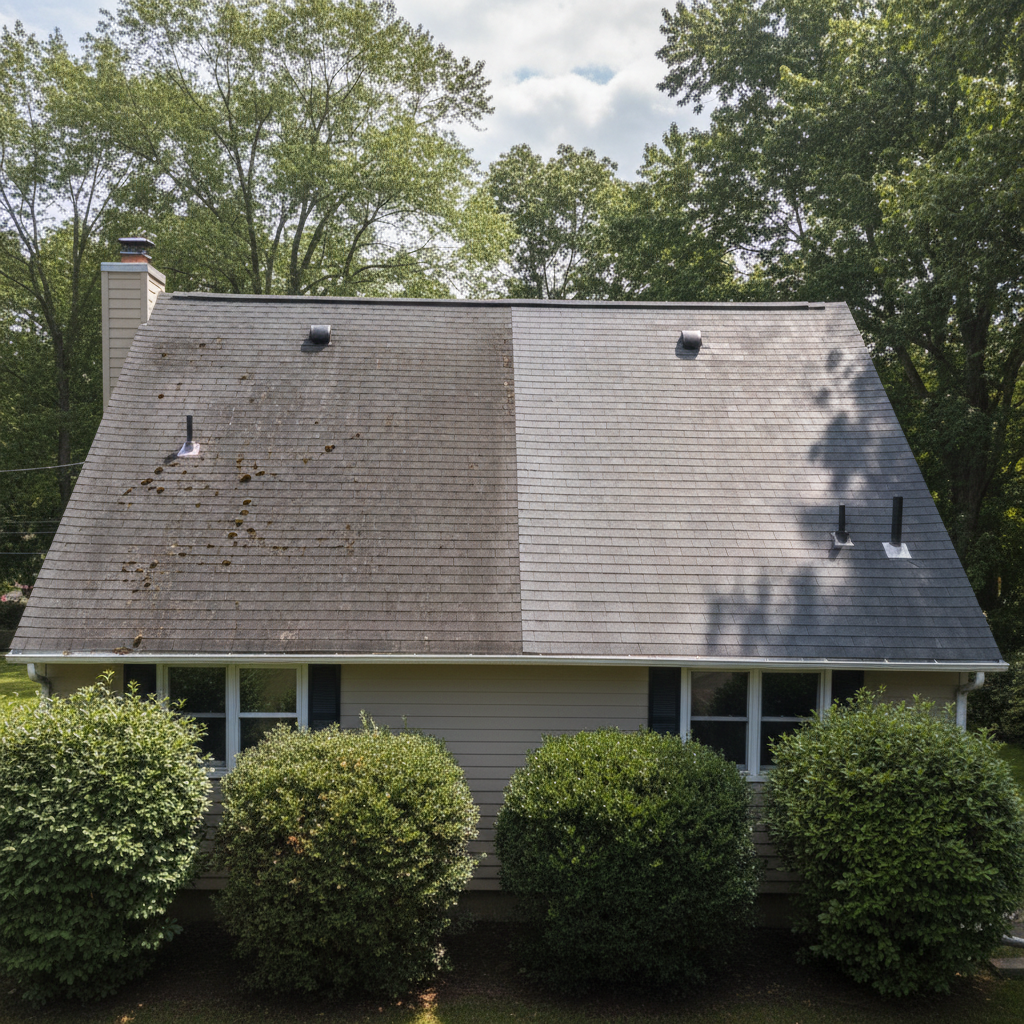
So, you need your roof checked out, right? What's the best way to do it these days? You've basically got two main choices: the old-fashioned way, where someone like me climbs a ladder and walks your roof, or the newer drone inspection method. Both have their place, sure, but let's chat about what really makes sense for most homeowners right here in North Providence.
Traditional Roof Inspection: The Way We've Always Done It
This is probably what pops into your head when you think about getting your roof inspected. Me, or one of my crew members, shows up, we set up our ladders, and we get right up there. We walk every inch of the roof surface, carefully checking each shingle, all the flashing, every vent, and the chimney. We're on the lookout for loose granules, shingles that are cracked, any spots where water might be pooling, damaged flashing around your skylights, and just general wear and tear.
You know, there's a good reason I still prefer this method for so many jobs:
- It's Super Thorough: Honestly, nothing beats being up close and personal. I can feel soft spots under my feet, which often points to hidden water damage you just can't spot from a distance. I can even lift shingles to check the underlayment. That's super important, especially after a tough winter with those heavy snow loads we often get around here – remember that big one a few years back that really put roofs in the Charles Street area through their paces?
- Quick Fixes on the Spot: If I find a loose nail or a shingle that's slightly lifted, I can usually fix it right then. This saves you another service call later and stops a tiny problem from turning into a big headache.
- A Human Eye Catches More: My eyes are trained to pick up on subtle issues a drone might miss. Things like small rust spots on flashing, or the exact condition of the sealant around your vent pipes.
- We Can Talk: I can chat with you right there, show you pictures of what I'm seeing, and explain everything face-to-face.
The main downside? It does take a bit more time, and there's a small risk for the inspector, which is why we're always extra careful and follow all our safety rules. Also, it might not work if your roof is incredibly steep or just plain hard to get to.
Drone Roof Inspection: The High-Tech Way
Drone technology has really come a long way, and it definitely offers some cool advantages. A drone flies over your roof, snaps high-resolution pictures, and sometimes even video. Then, all that data gets analyzed. Some companies even use AI to help sort through it all.
Here's where drones really shine:
- It's Safe: Nobody has to climb onto a dangerous roof. That's a huge plus for roofs that are really steep or might not be stable.
- It's Fast: A drone inspection can be done pretty quickly, often faster than a traditional walk-around.
- Gets Everywhere: It can reach those tricky spots that might be tough for a person to access safely.
- Great Records: You get a clear visual history of your roof's condition. This can be super handy for insurance claims or just keeping tabs on things over time.
But, and this is a pretty big 'but' for me, drones do have their limits. They can't feel soft spots, they can't lift shingles to check underneath, and they certainly can't make minor repairs right then and there. They also depend a lot on the quality of the camera, the skill of the drone operator, and whoever is analyzing those images. A high-res photo is nice, but it won't tell you if a shingle is brittle or if the decking underneath is rotting.
My Recommendation for North Providence Homeowners
For most homes around here, especially with the kind of weather we get—those heavy rains, ice dams, and strong winds—I still recommend a traditional, in-person roof inspection. You just can't beat how thorough it is and its ability to catch hidden problems that only a human eye and touch can find.
Think of it like this: a drone gives you a great overhead photo. A traditional inspection? That's a full physical exam. You really want the physical exam for something as crucial as your roof, especially since it's protecting your biggest investment.
Now, I'm not saying drones are useless, not at all. They can be a fantastic first step for huge commercial buildings, or for roofs that are genuinely too dangerous to walk on. They're also great for follow-up checks after a big storm if you just need a quick visual to see obvious damage before deciding if a full inspection is necessary.
But for your yearly check-up, or if you suspect a leak, or if you're getting ready to sell your home, go with a traditional inspection. It's more comprehensive, and it gives you that true confidence that comes from a professional getting up there and really looking at everything. What's more important than that?
Here at Superior Roofing Solutions, we always make it a priority to get a close, detailed look at your roof. We want to make sure we catch everything, whether it's big or small, so your roof stays in great shape for years to come. Give us a call if you're due for an inspection—we'll get up there and give you the real scoop.